Category: Natalia Pruklang

  • Behind the Scenes: How Social Media Drives Fan Engagement in Sports 

    Behind the Scenes: How Social Media Drives Fan Engagement in Sports 

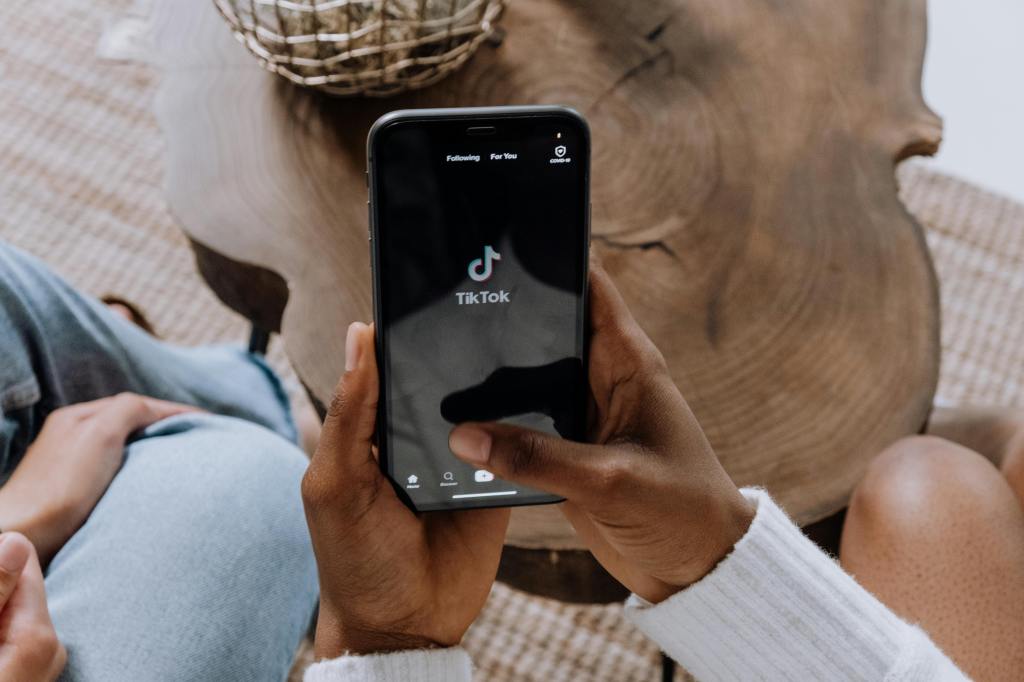
    Social media has transformed the way we engage with entertainment, from blockbuster movies to viral TikTok trends. But one of its most powerful—and often overlooked—impacts is in the world of sports. Teams and athletes are no longer just part of a game; they are online brands with dedicated followings, viral moments, and meme worthy content that fans can’t get enough of. 

    To dive deeper into the role of social media in shaping fan culture, I spoke with Travis Hall, Senior Coordinator of Social Media for the San Francisco Giants. With years of experience managing a major sports franchise’s digital presence, Hall provided valuable insights into the ever evolving relationship between social media, fan engagement, and brand identity.

    Meet Travis Hall

    Travis Hall didn’t always envision a career in social media. In fact, his journey started with aspirations in public relations before an internship introduced him to the digital side of the sports industry. Now, as Senior Coordinator of Social Media for the San Francisco Giants, he oversees everything from game-day content to long-term brand strategy, helping the team stay connected with its fan base both on and off the field.

    With platforms like X (formerly Twitter), TikTok, and Instagram redefining sports marketing, Hall’s role is a perfect example of how social media continues to reshape entertainment.

    The Shift in Fan Engagement

    One of the biggest trends Hall has noticed is the growing connection between fans and individual players, rather than just the team as a whole.

    “In my eyes, one of the most interesting shifts I’ve seen in young sports fans over the last 10 years is that they feel very connected to the players themselves, sometimes more than they feel connected to the team,” Hall explains.

    This is especially true for Gen Z, who have grown up with direct access to athletes through social media. The relationships being built between fans and athletes online allows for an even stronger fan presence for sport teams around the country. A kid in Oregon could be obsessed with the Philadelphia Eagles because of the online presence of Quarterback Jalen Hurts (fun fact: did you know Hurts’ management team is all women?). 

    When Social Media Shapes the Narrative

    In entertainment, social media plays a massive role in public perception—and the same goes for sports. Hall points out how even a struggling team can maintain strong digital engagement if they use humor and self-awareness.

    “An example that springs to mind comes from our friends doing social media for the White Sox. They endured one of the worst seasons in MLB history last year, but they leaned into it and poked a lot of fun at themselves. As a result, their engagements were good and lots of fans praised them for being a fun team to follow,” says Hall.

    This highlights a key lesson in social media marketing: a strong digital voice can shape how fans view a brand, even during tough times.

    The Future of Fan Engagement

    As Gen Z becomes the dominant audience online, social media strategies will continue evolving. The challenge will be maintaining authenticity while keeping up with quick trends.

    For students hoping to break into social media marketing in sports, entertainment, or any industry, Hall offers this advice:

    “If you want to manage social media, writing is by far the most important skill you can have.”

    He also stresses the importance of studying digital trends, recommending that aspiring professionals actively analyze what brands are doing well on social media.

    Whether in sports, film, or music, one thing is clear: social media is now the ultimate game-changer in entertainment.

    For those looking to break into this field, Hall’s insights reinforce an essential truth—understanding audience behavior, storytelling, and digital trends is key to success.
  • Twitter Wars and Cancel Culture: The Dark Side of Social Media in Entertainment

    Twitter Wars and Cancel Culture: The Dark Side of Social Media in Entertainment

    This blog would not be authentic if I were to be praising social media every week. As much as I love social media and the phenomenal ways it can influence the entertainment industry, the internet can be a scary place. 

    As we’ve discussed, social media has transformed how fans engage with entertainment. Platforms like X (formerly Twitter), TikTok, and Reddit have given rise to passionate fandoms that shape pop culture in unexpected ways. Whether it’s Swifties mobilizing to support Taylor Swift, Marvel fans dissecting every post-credit scene, or K-pop stans streaming songs to break records, fandoms have immense power. But with that power comes a darker side—toxic discourse, cancel culture, and online harassment. 

    Fandoms are no longer just groups of dedicated fans—they are organized digital communities that can influence everything from box office numbers to an artist’s career. However, this intense devotion can lead to toxic environments where differing opinions aren’t tolerated. Fans who criticize their favorite artist or franchise risk being doxxed, harassed, or bullied from online spaces. 

    Twitter Wars and the Rise of Cancel Culture

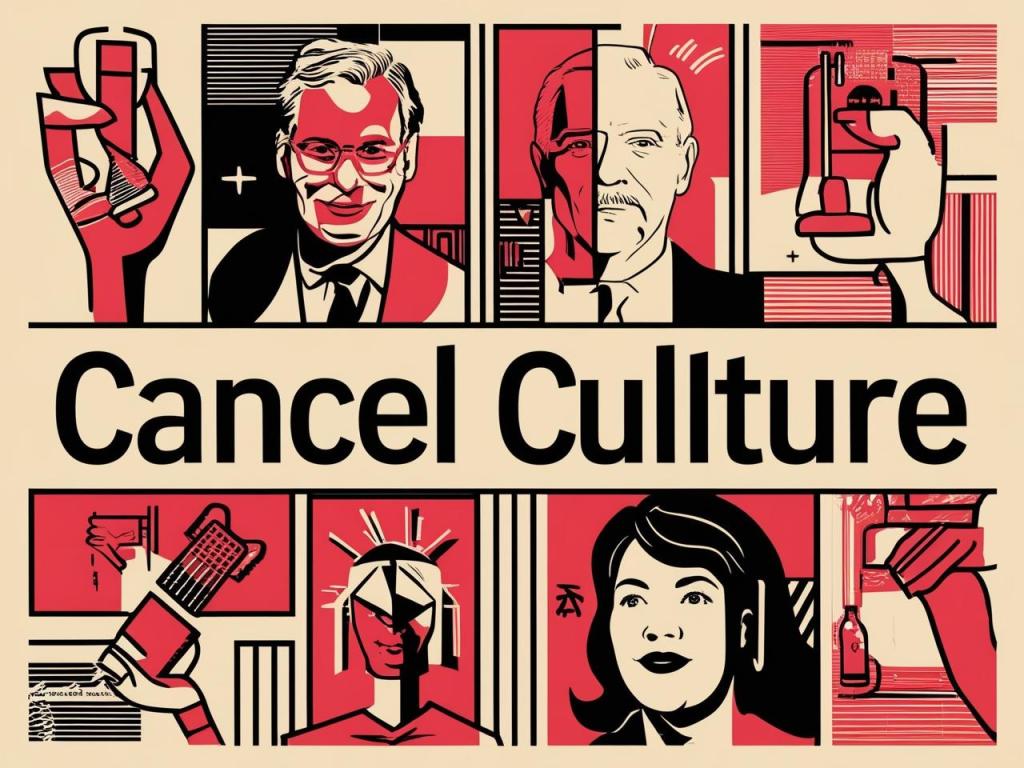
    Social media thrives on outrage and rapid information sharing, making it a comfy home for cancel culture. While accountability is important, the line between justified criticism and mob mentality has blurred. Celebrities, influencers, and even everyday users can find themselves “canceled” overnight due to resurfaced tweets, controversial opinions, or even just simple misunderstandings.

    Some examples of this:

    • Sydney Sweeney’s Family Controversy – The Euphoria actress came under fire when fans noticed her family members wearing clothing associated with right-wing politics at a birthday party. Despite Sweeney claiming she doesn’t share those beliefs, social media erupted with calls for her cancellation. 
    • Marvel Cast Backlash – Over the years, several Marvel Cinematic Universe (MCU) actors have faced social media scrutiny:

    Can Social Media Find a Balance?

    Social media has given fandoms a voice like never before, making entertainment more interactive and fan-driven. However, the constant cycle of outrage, cancel culture, and online wars raises concerns about mental health, misinformation, and parasocial relationships.

    As Gen Z continues to dominate the internet, there’s a growing discussion about whether social media platforms should implement better content moderation or whether fandoms themselves need to establish healthier ways of engaging with entertainment.

    For now, one thing is clear: social media’s impact on the entertainment industry is undeniable—for better or worse.

  • How Social Media Shapes Entertainment: An Analysis of Two Impactful Infographics 

    How Social Media Shapes Entertainment: An Analysis of Two Impactful Infographics 

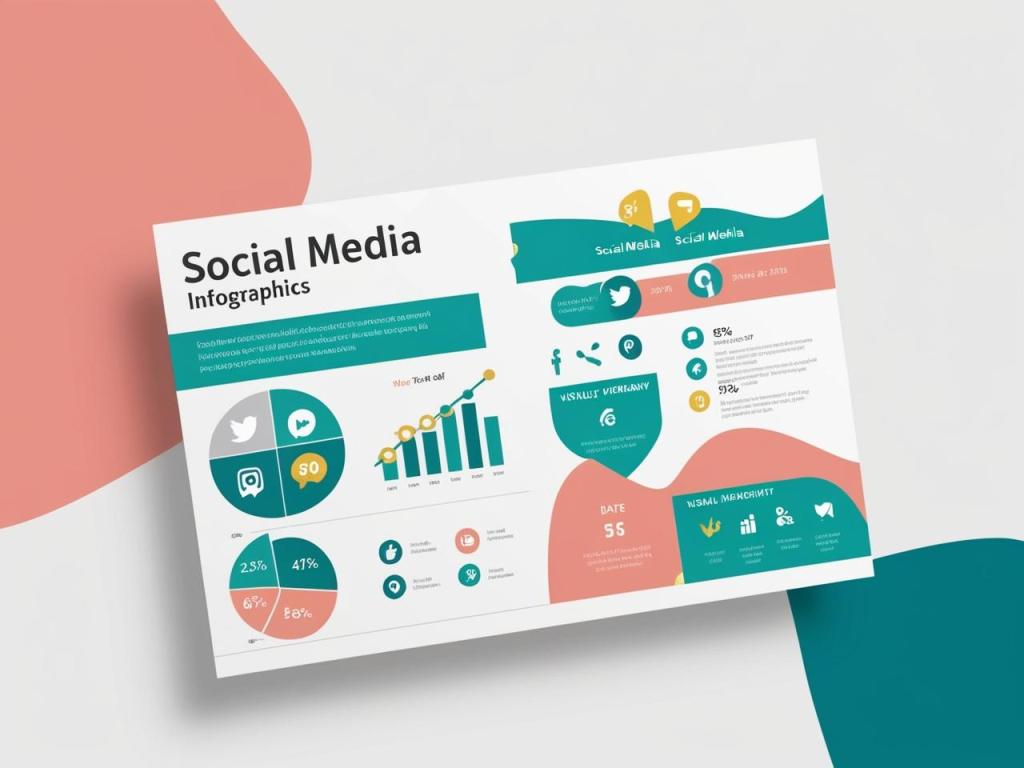
    Social media’s influence on the entertainment industry is undeniable. It shapes how content is consumed, marketed, and engaged with, especially among Gen Z. To explore this dynamic, I analyzed two infographics that effectively illustrate key trends in social media’s role in marketing.

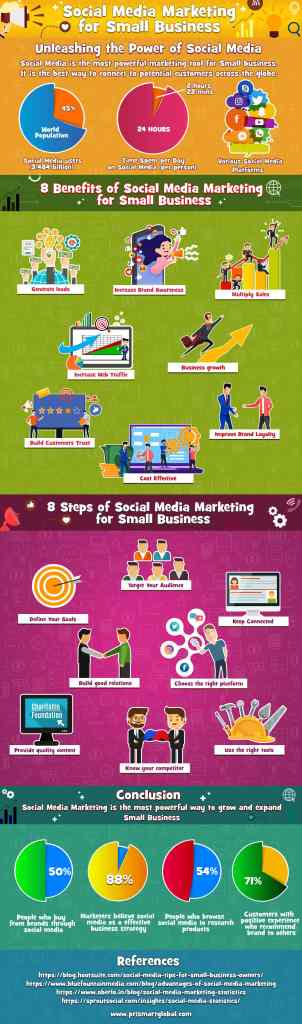
    Infographic 1: Social Media Marketing for Small Businesses

    While not directly about entertainment, this infographic highlights the power of social media marketing. Demonstrating how businesses leverage platforms to connect with audiences, it provides valuable insights into how social media drives brand awareness and audience engagement—two critical factors in entertainment marketing.

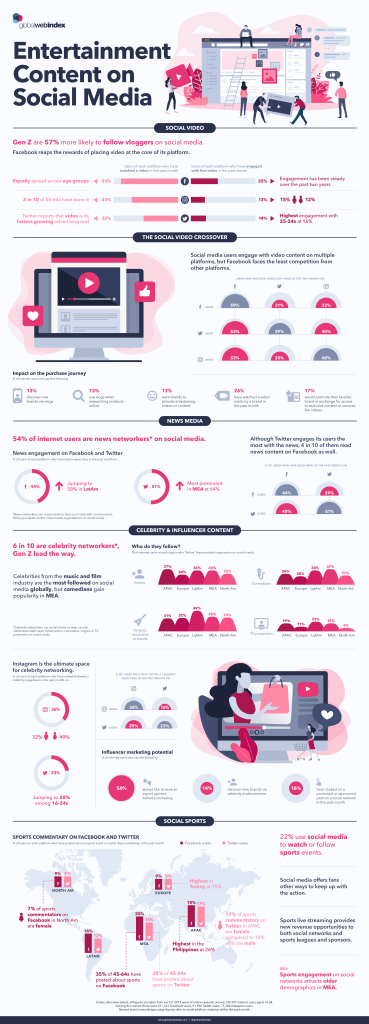
    Infographic 2: Entertainment Content on Social Media 

    This infographic focuses specifically on how social media fuels entertainment consumption. It breaks down the impact of video, news media engagement, influencer culture, and sports commentary, providing a comprehensive look at how users—particularly Gen Z—interact with entertainment content online. 

    Why These Infographics Are Effective

    Visual Element

    • Both infographics use clear section headers to guide the viewer’s eye. “The Entertainment Content on Social Media” infographic does this exceptionally well by breaking content into thematic sections—video, influencer content, and sports—allowing for quick comprehension. Meanwhile, the “Social Media Marketing for Small Businesses” infographic presents step-by-step benefits and strategies, making it easy to follow. 

    All things Colors

    • The small business marketing infographic uses bright colors like green, red, and orange to convey excitement and engagement, aligning with the lively nature of social media. The Entertainment Content infographic, on the other hand, opts for pink, navy, and white palette, creating a modern feel that appeals to Gen Z’s aesthetic preferences.

    How Well They Tell a Story with Data

    • Infographics are only effective if they communicate data visually rather than overwhelming with text. The small business social media marketing infographic does a really good job at this. The fun, colorful way it incorporates charts, icons, and data visualizations to present statistics in a more fun way. The Entertainment Content infographic also utilizes engaging graphics, though it leans slightly more on text. 
    • The Entertainment Content infographic tells a compelling story about how different entertainment sections like vlogging, influencer culture, news, and sports, all thrive on social media. It presents key statistics and trends in a way that builds a clear narrative of social media’s growing influence. The Social Media Marketing infographic, while more catered to small businesses, still effectively conveys how companies (including those in entertainment) should use social media to drive engagement and sales.
  • Duolingo Owl’s Death is a Good Thing for Social Media Teams

    Duolingo Owl’s Death is a Good Thing for Social Media Teams

    I would be doing a disservice to you all if I did not dedicate one of my blogs to the UO alumni genius behind the Duolingo social media team, Zaria Parvez. I owe a huge part of me going into the public relations field to Duolingo and the massive online persona she’s managed to create with Duo the Owl. 

    Unless you’ve been living under a rock, you would know that Duo the Owl died on February 11. Announced on all of its socials, Duolingo broke the news of its mascot Duo dying. The internet grieved. 

    Well, sort of.

    From Scrub Daddy posting a teary-eyed sponge to Spotify creating “Duo’s Funeral Playlist,” companies leaned into the joke of the owl’s death, fueling into the mass viral sensation currently still happening. This entire saga became a case study in reactive marketing—brands abandoning pre-scheduled posts to engage in a trending conversation in real time.

    Why It Worked

    • Timing is Everything: Duolingo posted the news, but its success relied on speed. Brands that responded quickly, like Spotify, Scrub Daddy, and Dead By Daylight reaped the rewards.
    • Knowing the Culture: Duolingo’s social media team understood its audience—Gen Z users who thrive on absurdly weird humor. The storyline felt natural to the playful tone they had already spent years building.
    • Brand Personality: This worked because Duolingo had already established a unique, unserious voice. It didn’t feel forced; it felt like exactly something they would do. 

    The Impact on Brand Perception

    Far from being “just a joke,” this boosted Duolingo’s brand awareness and deepened its connection with younger audiences. Users weren’t just laughing—they were reminded of the app’s presence, leading to increased app downloads and social media growth.

    Brands like Wendy’s have already shown that humor-driven social media works, but Duolingo took it a step further by blending humor with reactive, community-driven engagement.

    What It Means for the Future of Brand Marketing

    Reactive marketing is no longer optional, it’s essential. Gen Z values authenticity, humor, and brands that feel human. Companies that can adapt quickly to online trends will not only boost visibility but also build loyalty among newer audiences. 

    So, the next time a green owl “dies,” it might just be the best thing to ever happen to your brand.

  • Influencers are Taking Over Hollywood

    Influencers are Taking Over Hollywood

    The past three weeks we’ve talked about all the different ways social media has managed to impact the entertainment industry. But, we’ve yet to talk about one of the most impactful ways social media has on fame and how anyone ordinary can be a star. 

    Once upon a time, breaking into Hollywood required endless auditions, the right connections, and a bit of luck. Now? You just need a phone, Wi-Fi, and one viral video. Platforms like TikTok, YouTube, and Instagram are transforming ordinary creators into global celebrities—rewriting the blueprint for fame and shaking up the entertainment industry in the process.

    Social Media Stars Turned Celebs 

    Names like Charli D’Amelio, Alix Earle, Addison Rae used to mean nothing to me and you just mere five years ago, and now they are considered the mascots of our generation’s influencers. Influencers are no longer confined to their platforms. They’re headlining movies, topping music charts, and even walking the Met Gala carpet. Charli D’Amelio went from posting TikTok dances in her bedroom to starring in a Hulu reality series, The D’Amelio Show. Addison Rae made the leap to Netflix, landing the lead role in He’s All That, while Alix Earle just starred in five different Super Bowl commercials. 

    This shift is blurring the lines between traditional celebrities and internet personalities. Fans don’t just watch these creators, they feel like they know them. These fans watched those TikTokers’ journey to fame–every single step. This authenticity is what makes social media stars so powerful. They build fan bases rooted in personal connection. People see themselves in them because they started off as regular people like us. 

    Why Hollywood Is Paying Attention

    Entertainment companies are realizing that bringing social media stars into mainstream projects means bringing their fan bases too. When Addison Rae’s movie debuted, it wasn’t just Netflix subscribers tuning in; it was her 88 million TikTok followers showing up to support her. And movie star is not the only Hollywood title Addison Rae holds. She is also an artist, with 12.2 million monthly listeners. 

    This crossover between ordinary and industry also influences marketing strategies. Studios now regularly collaborate with influencers to promote new releases, tapping into their reach and relatability. Instead of relying solely on trailers and billboards, campaigns often feature creators making funny skits or posting behind-the-scenes content on TikTok. This format resonates more with Gen Z audiences. 

    And yes, there are downsides to influencers entering Hollywood, but I chose to highlight influencers in a positive way because I think we can appreciate a rags to riches story that we all wish can happen to ourselves.

  • Social Media is Shaping Entertainment One Fandom at a Time

    Social Media is Shaping Entertainment One Fandom at a Time

    In today’s digital era, marketing in the entertainment industry isn’t just about flashy billboards or commercials—it’s about tapping into the power of online fandoms. From Stan Twitter to TikTok fan edits, dedicated fan communities are playing a crucial role in shaping how movies, TV shows, and music are promoted. Entertainment companies are catching on, leveraging these passionate audiences to amplify their content in ways that feel authentic and organic. But how exactly does fandom-driven marketing work, and why is it so effective?

    The Power of Fandoms

    Fandoms are actively engaged communities that promote their favorite artists, shows, and franchises–all for free. Whether it’s through viral memes, streaming parties, or trending hashtags, fan bases generate massive online buzz that marketing teams can only dream of. Take Swifties or Barbz, for example—these fandoms have successfully organized global campaigns to break streaming records, influence award wins, and even cause Congress to take action. Their efforts go beyond casual support; they’re strategic, dedicated, and incredibly influential.

    While I could talk about fandoms and the power they truly veil, I wanted to dive deeper into how entertainment companies are starting to leverage fandoms for their own good. By engaging directly with fan communities, brands develop a sense of loyalty that traditional advertising can’t replicate. The key? Authenticity. Fans can tell when a brand is forcing engagement versus when they genuinely understand the culture.

    A Masterclass in Fandom Marketing

    One company that executed this flawlessly is Lionsgate on TikTok. During the promo for The Hunger Games: A Ballad of Songbirds and Snakes (2023), fans dug out an old 2014 YouTube edit of Josh Hutcherson (who plays Peeta Mellark) to “Whistle” by Flo Rida and it went viral everywhere.

    LionsGate caught wind of this viral sensation and had to jump on the trend. It made a TikTok of that photo and song and the fans were having a field day with it. Since then, Lionsgate’s TikTok has been posting edits of its movies that look like real fan edits. The fan engagement and interaction has only increased since then. WIth what could’ve been a boring forgotten company lost to the mass of social media accounts, Lionsgate took the opportunity to really connect with its audiences and stand out compared to other brands. 

    As companies lean toward hiring Gen Z interns to run its social media accounts, they should consider going beyond just that. Emerging into the culture of fandoms and embracing the way they run will overall benefit the connection between the industry and fans. 

  • How Netflix is Empowering the Next Generation of Storytellers

    How Netflix is Empowering the Next Generation of Storytellers

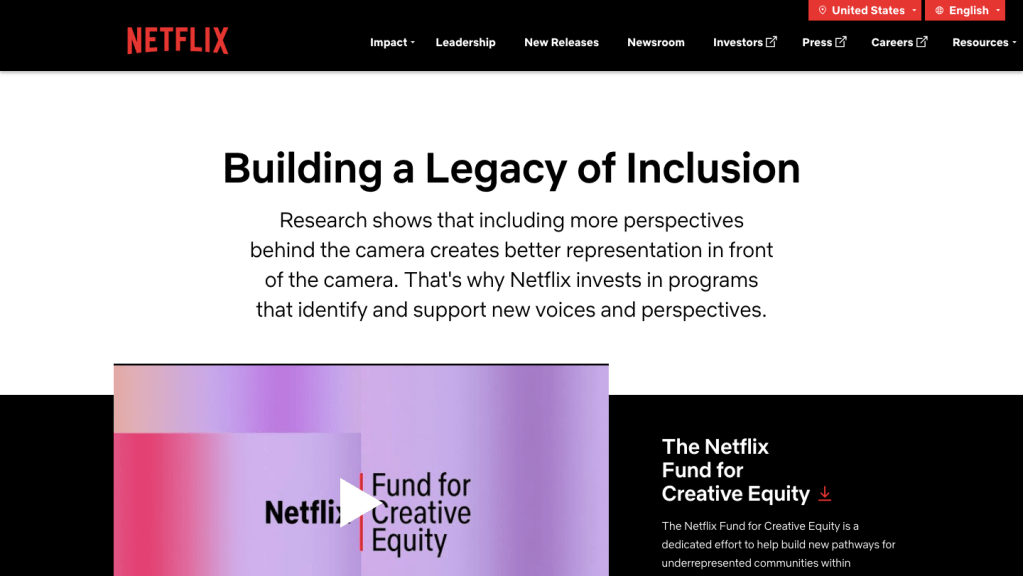
    Netflix has been a pioneer in the entertainment industry since 1997. What started off as a mail-in rental service for DVDs is now one of the largest streaming platforms in the world. But Netflix isn’t just about binge-worthy content—it’s also about making real change in Hollywood. Through the Netflix Fund for Creative Equity, the company is proving that storytelling should be just as diverse as the audiences watching.

    Fund for Creative Equity

    Launched in 2021, the Fund for Creative Equity is Netflix’s $100 million commitment to furthering diversity and inclusion in the entertainment industry. This initiative goes beyond just hiring diverse talent—it actively invests in mentorship, training, and career-building opportunities for underrepresented creatives, both in front of and behind the camera. By teaming up with organizations like the New York Film Academy, Sundance Institute, and the Academy, Netflix is creating real pathways for emerging filmmakers, writers, and industry professionals. The goal? To make Hollywood more inclusive and ensure authentic stories are being told by the people who have lived them. 

    Communication Strategies

    The Fund for Creative Equity isn’t just a behind-the-scenes initiative; Netflix is using every tool in its digital playbook to keep the conversation going and make an impact. Press releases and official announcements play a key role in spreading awareness. Netflix regularly drops updates about the fund on its corporate blog, About Netflix, giving a deep dive into its mission, the programs it’s backing, and the creatives it’s uplifting. These official statements establish transparency and reinforce Netflix’s commitment to supporting underrepresented voices in entertainment.

    Beyond its own platforms, Netflix partners with media outlets to amplify the fund’s impact. By collaborating with well-established organizations such as Philanthropy News Digest, Netflix ensures its initiative gets the credibility and visibility it deserves.

    And, of course, there’s social media—where Gen Z thrives. Netflix is no stranger to viral marketing, and it’s using Twitter, Instagram, LinkedIn, and YouTube to highlight the fund’s impact. Whether it’s sharing testimonials from up-and-coming filmmakers, showcasing new projects from diverse creators, or dropping quick vertical videos explaining why representation matters, Netflix keeps the content engaging and easy to digest. This strategy doesn’t just inform—it builds a community around the initiative, sparking conversations and keeping the support alive.

    How Does This Reach Us?

    Netflix’s messaging around the Fund for Creative Equity is clear and consistent, emphasizing its dedicated effort to help build new paths for those underrepresented in the entertainment industry. The use of multiple communication channels ensures that the message reaches diverse audiences, from industry professionals to the general public. 

    Brand Values

    The Fund for Creative Equity aligns seamlessly with Netflix’s brand identity as an innovator and leader in entertainment. By investing in underrepresented talent, Netflix not only highlights its content diversity but also reinforces its values of inclusivity and social responsibility. This initiative reflects Netflix’s understanding that diverse perspectives help storytelling and resonate with a global audience.

  • The Power of Hollywood in Crisis: LA Wildfire Relief from The Entertainment Industry

    The Power of Hollywood in Crisis: LA Wildfire Relief from The Entertainment Industry

    The Entertainment Industry Foundation (EIF) has been a pivotal force in using Hollywood’s star power to support charitable causes since 1942. Founded by legendary Hollywood stars Samuel Goldwyn, Humphrey Bogart, Joan Crawford, James Cagney, and the Warner brothers, EIF works tirelessly to address the needs of communities through the influence and power of the entertainment industry. Some of their programs like Hunger Is led by ambassador Viola Davis, Stand Up To Cancer, the EIF Careers Program, and Defy:Disaster all hope to create a bigger impact to individuals and communities in need.

    Mission and Core Services

    The Entertainment Industry Foundation’s mission is to mobilize the entertainment industry’s creative talents and voices to help others by funding initiatives that address health, disaster, and education. EIF’s Defy:Disaster program is designed to provide immediate disaster relief and long-term recovery to communities struck by natural disasters. Whether it’s through financial support, supplies, or volunteer efforts, EIF leverages its vast network of entertainment professionals to create a quick, organized response in the face of crises.

    A Closer Look at Defy:Disaster’s help during the LA WildFires

    The LA fires devastated everyone, leaving hundreds of California residents without homes and struggling in the aftermath. Several members of Hollywood also struggled, Paris Hilton’s home also being lost to the fires. In these times of great need, Defy:Disaster has been activated to provide immediate support from shelter, evacuation support, reconnection, food, and health care to long-term support of rebuilding homes, income recovery, and mental health. The program is also seeking donations to help support firefighters and first responders. 

    During the 2023 Maui fires, EIF also stepped in and mobilized local and national resources, working with Oprah Winfrey and Dwayne Johnson to raise over $60 million for the Maui people. 

    Social Media Presence 

    One of the key elements of EIF’s effectiveness in the LA wildfires responses was their strategic use of social media. Through Instagram, Facebook, and X (formally Twitter), EIF was able to spread awareness about the wildfire and rally donors and fans from around the globe. The EIF was mentioned on The Tonight Show starring Jimmy Fallon, sharing a link on its socials on where to donate. The foundation also posted regular updates about how funds were being allocated to affected families, encouraging continued support. 

    EIF’s communication strategy isn’t just about fundraising; it’s about humanizing the impact of these disasters and showing how each donation directly helps those in need. By posting video messages from volunteers and affected individuals, EIF created a narrative that made the crisis feel personal and immediate, inspiring action in a way that only the entertainment industry can. 

    Effectiveness 

    In my opinion, EIF’s response to the LA wildfires through Defy:Disaster was not only effective but also a beautiful example of what happens when the entertainment industry comes together for a cause. Their ability to quickly gather resources, engage their audience on social media, and coordinate relief efforts shows that EIF has mastered the art of crisis management in the nonprofit space.

    This program highlights the crossover of entertainment and social good, demonstrating how nonprofits can make a difference when they harness their networks and platforms. The success of Defy:Disaster in response to the LA wildfires offers a blueprint for other organizations looking to drive meaningful change during times of crisis.

    For more information on Defy:Disaster and how you can help, visit https://www.eifoundation.org/eif-programs/defy-disaster/?form=FUNLDDMZGLN

  • Gen Z: The Secret Weapon to Entertainment’s Digital Success 

    Gen Z: The Secret Weapon to Entertainment’s Digital Success 

    In today’s entertainment industry, social media has become more than just a promotional tool– it is the frontline of audience engagement and brand identity. Behind many viral brand moments on platforms like TikTok, Instagram, and X (formally Twitter), there is usually a Gen Z social media intern crafting the genius content, responding to fans, and shaping the online brand of major entertainment companies. But why are Gen Z interns so effective in this role? And how are they transforming digital marketing in entertainment? 

    How Gen Z Interns Are Shaping Social Media Success

    Gen Z, born between 1997 and 2012, have grown up in a fully digital world. As a Gen Z member myself, I witnessed the creation of smartphones and social media platforms at the same time I was learning how to do fractions. Because of how integrated technology is in our society, Gen Z became fully native to the language, trends, and behaviors of social media platforms. Unlike previous generations who had to adapt to the emerging digital world, Gen Z inherently understands how to capture an audience’s attention by creating engaging content and navigating online culture in a way that resonates authentically. 

    One of my favorite examples of this is the Barbie movie’s marketing campaign. Barbie (2023) dominated social media and became the marketing campaign of the year. The promotion surrounding this film was huge, Warner Bros. collaborated with several different brands and companies, even as far as having a real life Barbie Dreamhouse available to book on Airbnb in Malibu. Warner Bros. tapped into Gen Z creatives to develop highly engaging content throughout different platforms that made Barbie into the inescapable global phenomenon that it was. Social media interns jumped on the viral “Barbenheimer” meme and the AI- generated Barbie selfie, all of which played a key role in turning the film into one of the biggest box office successes of the year.

    Similar strategies are still being seen in the entertainment industry. Whether it’s movie studios promoting upcoming releases, streaming platforms hyping up a new series, or fans creating their own campaign, Gen Z interns often play a huge role in shaping these digital campaigns 

    Authenticity Over Corporate Tone

    One of the biggest strengths of Gen Z social media interns is their ability to bring authenticity to brand messaging. Today’s audiences, especially younger consumers, are able to easily detect corporate-sounding content, which can be boring. Gen Z marketers bring a casual, relatable, and sometimes chaotic energy to brand accounts—making them feel more like a friend than a company wanting your money. 

    A great example is Netflix’s presence on apps like X, TikTok, and Instagram. Its accounts thrive on humor, pop culture references, and direct fan engagement. Their posts often feel like they’re coming from a real person rather than a marketing team, which helps deepen connections with audiences. 

    The Future of Social Media in Entertainment

    As social media continues to grow, brands and companies will continue to rely on Gen Z voices to stay relevant. This generation’s deep understanding of pop culture combined with their creativity and adaptability, makes them valuable assets in the industry. 

    For aspiring PR professionals and social media strategists like myself, this shift provides exciting opportunities. Companies are actively seeking fresh, tech-savvy voices to shape their online presence—and Gen Z is proving they are up for the challenge. 

  • How Social Media is Shaping the Entertainment Industry

    How Social Media is Shaping the Entertainment Industry

    In the last decade, social media has taken control over how we consume and engage with entertainment. Whether it’s a song blowing up on TikTok, or a viral meme turning a movie into a cultural phenomenon, the digital age has reshaped the entertainment industry in profound ways.

    If the rise of social media’s influence on media interests you, you’ve come to the right place. Welcome to my blog, here we will be talking all things social media and the impact it has on the entertainment industry. We will explore viral trends, marketing strategies, fandoms, and everything in between.

    Why This Topic?
    As a member of Gen Z myself, I grew up side by side with social media. I saw first hand the power it had to connect people from all around the world with just one click. The ever-growing presence of social media intrigued me enough to ask to run my high school’s social media pages. From there, I quickly realized how much influence digital platforms could have, not just in promoting content but in building communities and driving conversations. Now, as I delve deeper into my studies as a junior public relations major, the crossing of social media and entertainment is where I see the future of communication unfolding.

    The rise of Instagram, TikTok, Twitter (now X), and YouTube has revolutionized how entertainment is marketed, consumed, and discussed. Social media has given artists, creators, and entertainment companies direct access to their audience, allowing for them to build personal connections with fans. This doesn’t just change the way content is delivered, it is also changing how it’s received. Anything can go viral overnight.

    What to Expect

    Throughout this blog, I will be exploring various topics that highlight the significant impact social media has on entertainment. You can expect to see posts regarding:

    • Social media marketing: Analyzing how entertainment brands use platforms to promote projects and content.
    • Viral trends: How social media can help tv shows, movies, and songs become global sensations so quickly
    • PR campaigns: Dissect how viral movie campaigns like Barbie and Wicked took over the internet

    So if you’re passionate about entertainment, social media, and digital PR, join me on this adventure of exploring how these platforms are changing the entertainment world as we know it.